
English| EUR
Suggested for you
More currencies
Choose a language
Talkeetna sits at the heart of Alaska's dog mushing culture, where working sled teams train beneath Denali's shadow. Whether you're planning a winter expedition or a summer kennel visit, understanding what's available—and when—shapes the experience you'll actually have.
Quick answer
Yes, you can go dog sledding in Alaska year-round, with Talkeetna serving as one of the state's premier mushing destinations. Winter sledding runs from November through March on snow-packed trails, while summer kennel tours from May through September include wheeled cart rides and puppy interactions. Most operations are open daily from 09:00 to 17:00, with free kennel access and individually priced tour activities.
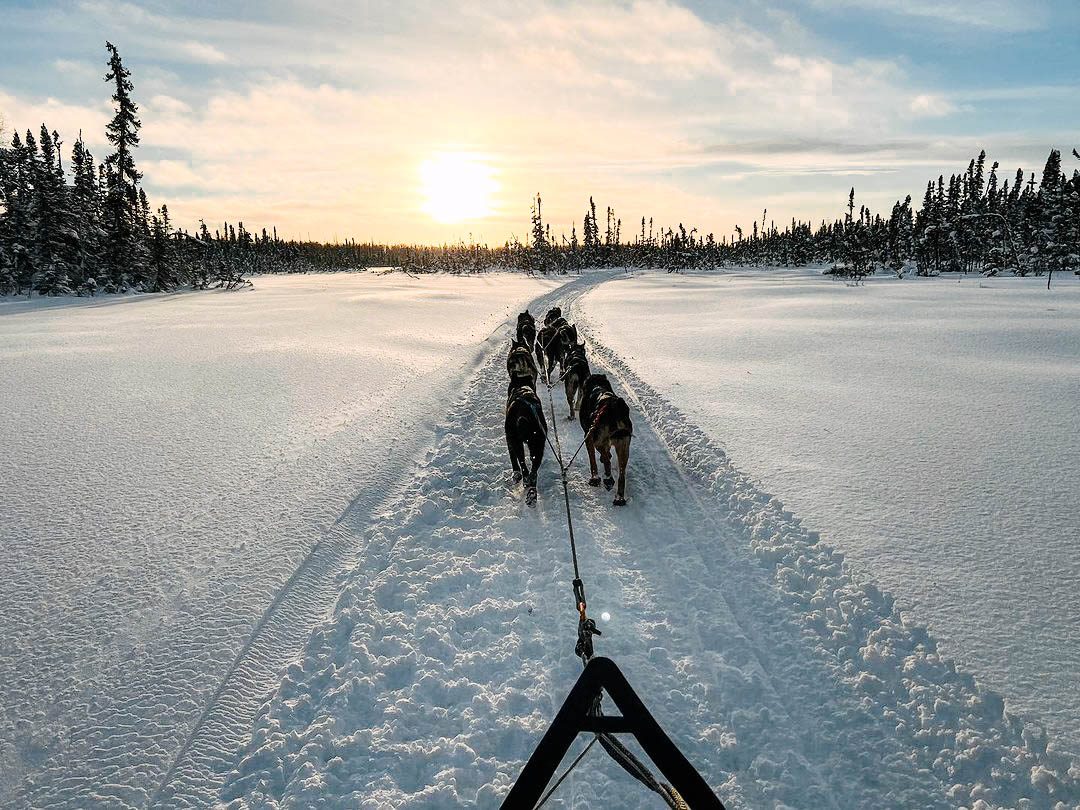
Talkeetna's working sled dog kennels outnumber its human residents—a legacy of the town's role as a staging point for Denali expeditions and Iditarod training camps. The question isn't whether Alaska dog sledding exists here, but which format fits your travel window and what distinguishes a legitimate mushing experience from a photo opportunity. Winter transforms the landscape into a functional training ground. Snow cover typically arrives in November and holds through late March, allowing kennels to run full sled tours on groomed wilderness trails. You'll ride behind teams of eight to twelve Alaskan huskies—purpose-bred athletes distinct from the Siberian breed—covering three to ten miles depending on the route. Mushers narrate trail conditions, explain gangline mechanics, and demonstrate the verbal commands that control a team without reins. The sleds are low wooden basket designs, not the cushioned toboggans marketed at lower-latitude resorts. Dress for stationary cold: riders generate no body heat, and wind chill at fifteen miles per hour drops the effective temperature well below the posted forecast. Summer operations pivot to kennel tours and wheeled cart demonstrations. These attract climbers waiting for Denali weather windows and cruise passengers on shore excursions from Seward or Whittier. The experience centers on kennel infrastructure—puppy pens, feed protocols, the logistics of maintaining forty to sixty dogs—and short demonstration runs on all-terrain carts. It's educational rather than immersive, but it grants access to mushers who winter on the trail and answers the logistical questions most outsiders never consider: how a kennel finances itself between race seasons, why retired sled dogs don't transition to pet homes, what happens when a team encounters a moose at full speed. Talkeetna's mushing culture runs deeper than its visitor economy. Several kennels here have produced Iditarod finishers, and the town's gravel airstrips support glacier dog sledding flights—helicopters ferry tourists and dog teams to snowfields on the Ruth Glacier's flanks for year-round sledding, though that's a separate tier of activity with separate operators and costs. The kennel-based experiences remain the accessible entry point, and they operate on a walk-in model during daylight hours. Advance reservations tighten availability during peak cruise weeks in June and July, but the rhythm stays consistent: arrive between 09:00 and 16:00, tour the facilities at no charge, and book individual activities on-site if capacity allows.
“Talkeetna's working sled dog kennels outnumber its human residents—a legacy of the town's role as a staging point for Denali expeditions and Iditarod training camps.”
The prime window for dog sledding in Talkeetna is February through March when snow conditions are most reliable for traditional sledding. During summer months, activities shift to wheeled training sessions or helicopter-accessed glacier tours.
Cold, 10°F to 25°F
Reliable snow cover allows for traditional sledding experiences on local trails.
Mild, 55°F to 75°F
Training moves to wheeled carts or glacier-based sledding via flightseeing tours.
Variable, 20°F to 45°F
Limited snow availability often requires flexible booking for kennel visits and educational tours.
—
Arrival between 09:00–16:00 provides optimal daylight and flexibility for kennel tours and sledding activities.
Verdict: The best period for traditional dog sledding is February through March, ideally arriving between 09:00–16:00 to maximize available daylight.
Kennels in Talkeetna operate daily to accommodate visitors interested in dog sledding activities. The facilities maintain consistent hours throughout the week.
Access to the kennel area in Talkeetna is free of charge, as there is no general admission fee. Costs are associated exclusively with individual dog sledding tours and kennel activities.
Verdict: While facility entry is free, the total cost for dog sledding is determined by the specific tour or experience selected by the visitor.
Talkeetna is located in the Matanuska-Susitna Borough, accessible primarily via the George Parks Highway or the Alaska Railroad. Most visitors arrive by personal vehicle or rail service from Anchorage.
George Parks Highway (AK-3) north from Anchorage
Alaska Railroad Coastal Classic or Denali Star to Talkeetna Station
Plan your arrival within the best arrival window of 09:00–16:00 to ensure optimal daylight and sufficient time for scheduled kennel tours and sledding activities.
Book ahead and dress for sub-zero conditions to make the most of your Talkeetna dog sledding experience.
Everything you need to know about can you go dog sledding in alaska
Yes, Talkeetna is a premier location for dog sledding excursions. Visitors can engage with professional mushers and their teams in this scenic Alaskan town.
While winter offers the traditional snowy experience, many kennels operate summer training sessions or kennel tours. You should check individual operator schedules for specific seasonal availability.
Entrance to the facility grounds is 0 USD. Please note that individual tours and hands-on activities are priced separately by each operator.
To experience dog sledding in Alaska, it is recommended to research reputable kennels in the Talkeetna area in advance. Booking your spot through official channels ensures you have a confirmed reservation for your travel dates.
Many operators welcome families, though age and weight restrictions may apply depending on the specific tour type. It is advisable to review the requirements of your chosen provider before booking your experience.
Yes, kennel tours provide an educational look at the life of sled dogs and the history of mushing in the region. These visits are a great way to interact with the animals even when snow is not on the ground.
The best arrival window is between 09:00 and 16:00. This timeframe provides the most daylight and flexibility for participating in scheduled kennel activities.
Yes, several kennels in the area offer cart-based mushing or dry-land training experiences during the summer. These sessions allow guests to see the dogs in action regardless of the snow conditions.